
For years, building efficiency has been analysed mainly through an engineering lens – HVAC systems, thermal envelopes or renewable energy. However, a substantial part of a building’s environmental performance is defined inside: through materials, furniture and interior design decisions.
In contract environments, hotels, student residences, offices or hospitality spaces, interior design has shifted from a purely aesthetic discipline to a strategic lever. It directly impacts indoor environmental quality, durability and user wellbeing.
What is sustainable interior design in contract projects?
Sustainable interior design starts from a clear premise: every material has an environmental footprint. Floors, coatings, textiles or furniture are all part of a building’s lifecycle.
In contract projects, this translates into working with specific criteria:
- Low-emission materials
- Certified wood
- Traceable production processes
- Suppliers with environmental certifications
These decisions influence not only sustainability metrics, but also maintenance cycles, operational costs and user experience over time.
Frameworks such as LEED certification incorporate strict requirements for material selection and indoor environmental quality. At the same time, ISO 14001 ensures that manufacturers implement robust environmental management systems, controlling impact and driving continuous improvement across the supply chain.
Low-emission materials and indoor air quality
Reducing volatile organic compounds (VOCs) is one of the most critical aspects of sustainable interior design. Common elements such as paints, adhesives or flooring systems can release pollutants that degrade indoor air quality.
Specifying low-emission materials allows projects to:
- Improve indoor air quality
- Reduce allergies and respiratory irritation
- Create healthier environments in high-occupancy spaces
This is especially relevant in contract settings, where spaces are used intensively and continuously.
Responsible materials and traceability
Material selection also plays a central role in reducing environmental impact. Typical strategies include:
- FSC-certified wood
- Recycled materials
- Rapidly renewable resources such as cork or bamboo
Beyond the material itself, other variables are equally relevant:
- Local sourcing to reduce transport emissions
- Durability to extend lifecycle
- Ease of maintenance
Working with manufacturers certified under ISO 14001 adds an additional layer of reliability, ensuring controlled processes, emissions reduction and responsible waste management.
Transparency is becoming a key requirement. Tools such as Environmental Product Declarations (EPD) and Health Product Declarations (HPD) provide verifiable data on material composition and lifecycle impact, enabling more informed design decisions.
Interior design as a driver of wellbeing
These decisions are reflected directly in the user experience. Sustainable interiors contribute to:
- Better air quality
- Improved acoustic comfort
- Enhanced visual comfort
- Greater overall wellbeing
At the same time, durable and well-specified materials reduce maintenance needs and improve long-term efficiency—critical factors in hospitality and residential assets where performance and experience are closely linked.
Case study: LEED Platinum student residence in Madrid
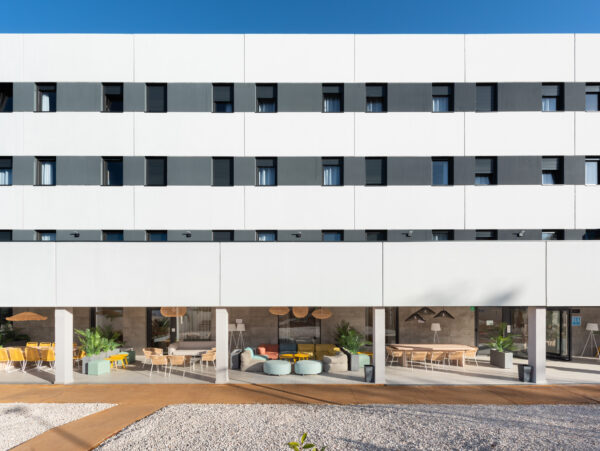
A relevant example is a student residence in Madrid, developed with the participation of Alpha Contract, which achieved LEED Platinum certification from the U.S. Green Building Council.
Key strategies implemented in the project include:
- Lighting systems adapted to natural daylight cycles
- On-site photovoltaic energy generation
- Continuous indoor air quality monitoring
In this context, interior design is not an isolated layer—it is integrated into a broader sustainability strategy. Material selection, furniture design and spatial planning all contribute to creating efficient, healthy environments designed for intensive use.
From aesthetics to performance
Interior design in the contract sector has evolved beyond aesthetics. Today, it defines how spaces perform, how they are experienced and how they endure over time.
Well-designed interiors do more than look good – they optimise environmental quality, support user wellbeing and contribute directly to the overall efficiency of the building.